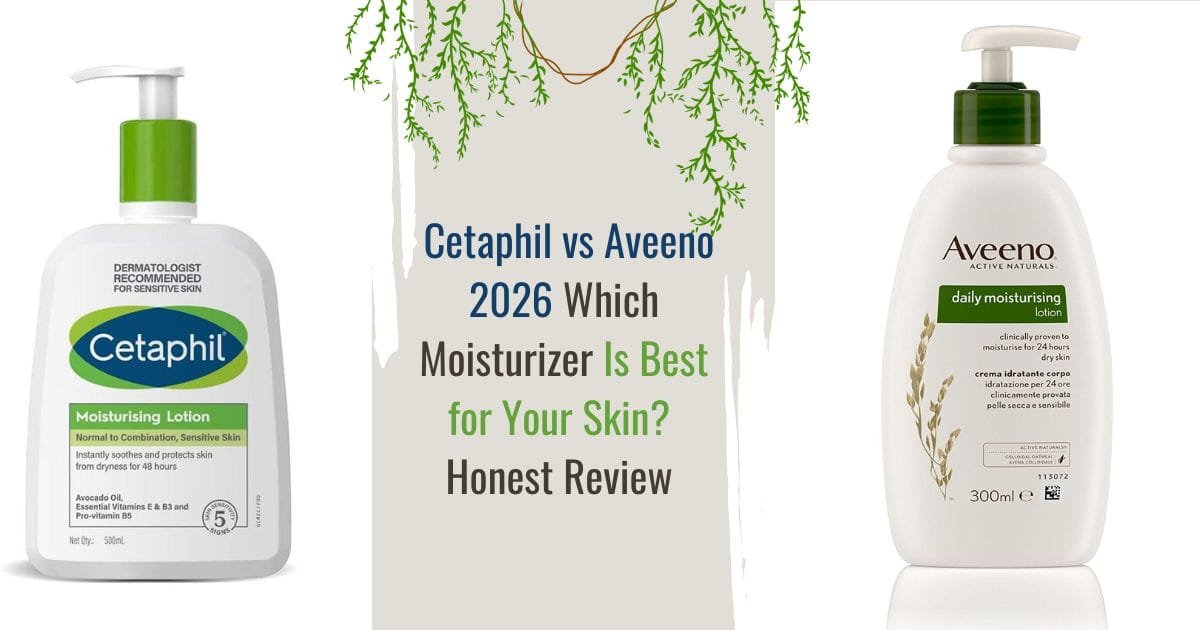
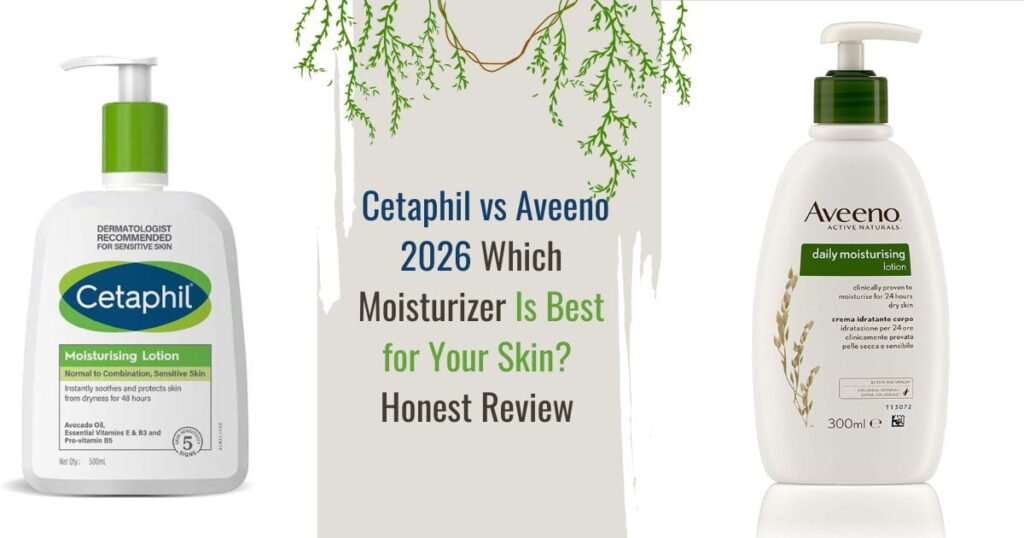
Cetaphil vs Aveeno 2026: Which Moisturizer Is Best for Your Skin? -Honest Review
Choosing the right drugstore moisturizer can feel overwhelming, especially with countless products claiming to be gentle, hydrating, or dermatologist-recommended. Two of the most popular and widely trusted options are Cetaphil Moisturizing Lotion and Aveeno Daily Moisturizing Lotion, each offering unique benefits. Both are lightweight, fragrance-free, and generally well-tolerated by sensitive skin. However, they differ significantly in hydration level, absorption speed, ingredients, skin type compatibility, and price, which can make a huge difference depending on your daily skincare routine. Selecting the right moisturizer isn’t just about convenience—it also impacts long-term skin health, including barrier function, elasticity, and moisture retention.
Selecting the right one ensures soft, healthy, and moisturized skin while reducing the risk of irritation, dryness, or breakouts. In this expert guide, we’ll break down texture, ingredients, application tips, price, pros and cons, and FAQs, helping you confidently pick the best option for your skin. This guide is ideal for anyone looking for a trusted drugstore moisturizer, whether for dry, sensitive, or oily skin, and is designed to help you make the smartest purchase decision in 2026. By the end of this article, you’ll know which lotion suits your daily routine, skin type, and budget, so you can achieve healthy, glowing skin effortlessly.
Quick Comparison: Cetaphil vs Aveeno
| Feature | Cetaphil Moisturizing Lotion | Aveeno Daily Moisturizing Lotion |
|---|---|---|
| Hydration Level | Deep, long-lasting | Moderate, lightweight |
| Absorption | Slower (~15 min) | Fast, almost instant |
| Skin Type | Dry, sensitive | Normal, oily, combination |
| Texture | Rich, creamy | Lightweight, breathable |
| Key Ingredients | Avocado Oil, Hydrogenated Polyisobutene, Vitamin E | Oat Kernel Flour, Petrolatum, Dimethicone |
| Fragrance | Fragrance-free | Fragrance-free |
| Price | Higher | More affordable |
| Cruelty-Free | No | No |
Texture & Application: Cetaphil vs Aveeno
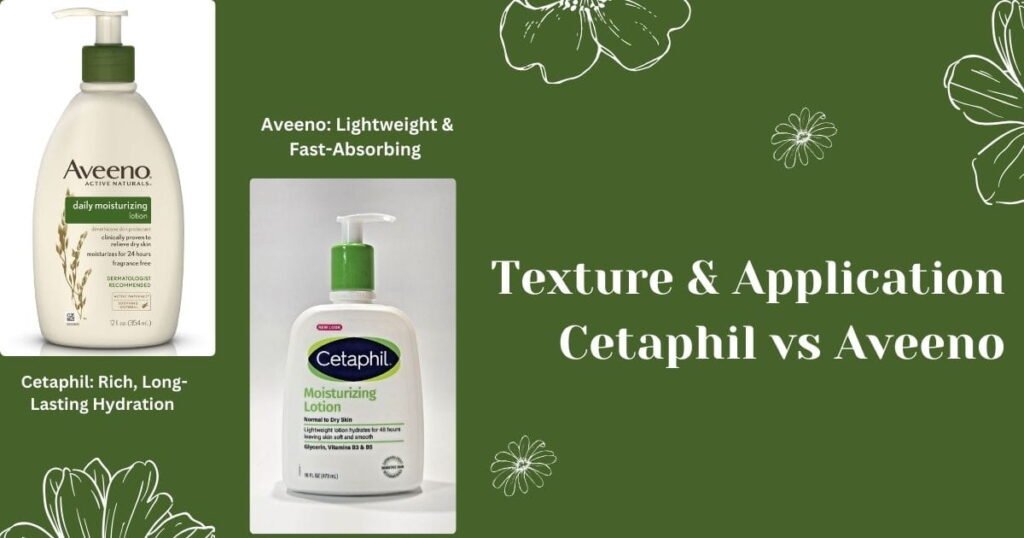
Cetaphil: Rich, Long-Lasting Hydration
Cetaphil has a creamy yet lightweight texture that spreads smoothly on the skin, providing intense, long-lasting hydration. It strengthens the skin barrier, which is essential for dry or sensitive skin types, protecting against irritation caused by environmental stressors. Although it takes approximately 15 minutes to fully absorb, this long-lasting moisture reduces the need for reapplication and ensures your skin stays soft and nourished throughout the day.
Pairing Cetaphil with a hydrating serum or facial oil enhances moisture, particularly during cold, dry months, low-humidity environments, or harsh winters. Regular use prevents redness, flakiness, and irritation, supporting healthy, resilient skin over time. The rich formula also provides antioxidant support and helps protect against early signs of aging, making it an ideal choice for those who want both hydration and long-term skin health.
Aveeno: Lightweight & Fast-Absorbing
Aveeno’s lotion is lightweight, fast-absorbing, and soothing, making it perfect for morning routines, layering under makeup, or quick applications. Its primary ingredient, oat kernel flour, helps calm irritation and redness, while petrolatum acts as a moisture-locking occlusive, preventing water loss. The breathable finish prevents greasiness, making it ideal for normal to oily skin and those who prefer a non-heavy feel on the skin.
While slightly less hydrating than Cetaphil, Aveeno’s convenience and speed make it excellent for daily use, travel, or humid climates. It leaves skin soft, smooth, and hydrated without heaviness, and it can be applied immediately under sunscreen or makeup. Over time, consistent use reduces dry patches and irritation, making it a practical choice for anyone who wants lightweight hydration combined with comfort.
Ingredients Breakdown: Cetaphil vs Aveeno – Why Formulas Matter
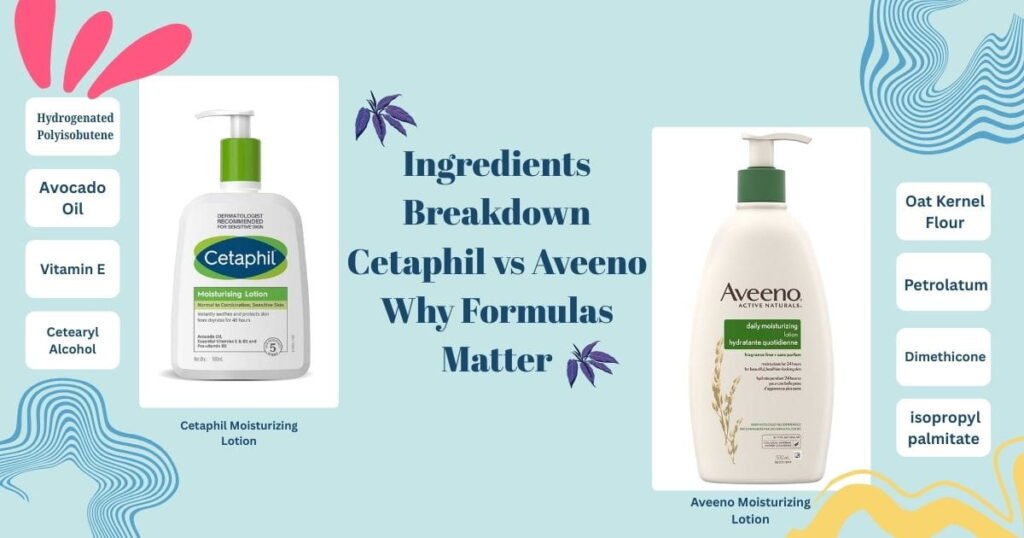
Ingredients determine how moisturizers perform for different skin types. Both Cetaphil and Aveeno contain glycerin and dimethicone, which hydrate and protect the skin. However, other ingredients influence hydration, sensitivity compatibility, and potential pore-clogging effects. Understanding these differences helps you choose the right lotion for your unique skin needs and lifestyle.
Cetaphil Key Ingredients
- Hydrogenated Polyisobutene: Softens skin and gives a silky texture
- Avocado Oil: Fast-absorbing, antioxidant-rich, deeply nourishing
- Vitamin E: Protects against free radicals and supports skin health
- Cetearyl Alcohol: Thickens the formula safely, non-comedogenic
These ingredients work together to provide barrier support, hydration, and long-term skin resilience, making Cetaphil especially suitable for extremely dry, sensitive, or reactive skin types.
Aveeno Key Ingredients
- Oat Kernel Flour: Soothes irritation, hydrates, safe for most skin types
- Petrolatum: Locks in moisture effectively and prevents transepidermal water loss
- Dimethicone: Forms a protective barrier and smooths the skin
- Isopropyl Palmitate: Can be comedogenic; caution for acne-prone skin
Aveeno’s combination provides fast absorption and soothing properties, ideal for everyday hydration, but those with sensitive or acne-prone skin may need to test it cautiously.
Takeaway: Cetaphil is optimal for dry and sensitive skin, providing long-lasting hydration and barrier repair, while Aveeno suits normal to oily skin, offering lightweight, fast hydration.
Price, Packaging & Value: Cetaphil vs Aveeno
Aveeno is typically $1.50–$3.50 cheaper than Cetaphil and comes in an 18 oz bottle versus Cetaphil’s 16 oz. Both feature pump dispensers for easy, hygienic use. Cetaphil’s stockier bottle conveys durability, while Aveeno’s sleek design fits neatly on shelves and in bathrooms.
While Aveeno is more budget-friendly, Cetaphil provides premium ingredients and longer-lasting hydration, making it cost-effective over time for those who want intensive moisture without frequent reapplication. Choosing between them comes down to whether you value convenience and affordability (Aveeno) or deep hydration and skin barrier support (Cetaphil), especially in winter months or dry climates.
How to Apply for Maximum Results: Cetaphil vs Aveeno
- Begin with a clean, dry face or body, removing dirt, oil, and makeup.
- Apply 1–2 pumps evenly across skin, focusing on dry or irritated areas.
- Allow ~15 minutes for Cetaphil to absorb fully for maximum hydration.
- Aveeno absorbs almost instantly and can be layered under sunscreen, serums, or makeup.
- Pair with a hydrating serum or facial oil for extremely dry or sensitive skin.
Pro Tip: Use Aveeno in the morning for quick hydration and Cetaphil at night for intensive barrier repair. This combination balances fast absorption with long-lasting moisture, keeping skin soft, smooth, and resilient all year round.
FAQ: Cetaphil vs Aveeno
Q1: Which is better for dry or sensitive skin?
Cetaphil provides rich hydration and supports the skin barrier, making it ideal for dry or sensitive skin. Aveeno is lighter and better for less dry skin but may not suffice in extremely dry climates or winter months.
Q2: Can I use these on my face?
Cetaphil works well on the face, especially for dry or sensitive skin, while Aveeno may clog pores due to isopropyl palmitate, particularly for acne-prone individuals.
Q3: Which moisturizer absorbs faster?
Aveeno absorbs almost instantly, perfect for mornings. Cetaphil takes ~15 minutes but provides long-lasting hydration that reduces the need for reapplication.
Q4: Are these products cruelty-free or vegan?
Neither Cetaphil nor Aveeno are certified cruelty-free or vegan. Ethical buyers may prefer alternative brands if sustainability or animal welfare is a priority.
Q5: Which is better for winter?
Cetaphil’s rich formula is ideal for winter barrier support, while Aveeno may require multiple applications during cold, dry weather.
Pros & Cons Summary: Cetaphil vs Aveeno
Cetaphil Pros:
Deep hydration, gentle on sensitive skin, supports barrier, dermatologist-recommended, fragrance-free.
Cetaphil Cons: Slower absorption (~15 min), slightly greasy for oily skin, higher price.
Aveeno Pros: Fast absorption, lightweight, budget-friendly, suitable for normal/oily skin, soothing, fragrance-free.
Cetaphil Cons: Less moisturizing for very dry skin, may clog pores, may require reapplication.
Takeaway: Both lotions serve distinct purposes: Cetaphil for deep, barrier-supporting moisture and Aveeno for quick, lightweight hydration and affordability, making them complementary depending on your skin needs.
Wrap up: Cetaphil vs Aveeno
When it comes to Cetaphil vs Aveeno, choosing the right moisturizer depends on your skin type, lifestyle, and budget. For dry or sensitive skin, Cetaphil offers rich, long-lasting hydration and supports your skin barrier effectively. Oily or combination skin benefits more from Aveeno, which absorbs quickly without leaving a greasy residue. If you’re looking for a budget-friendly option, Aveeno provides great value without compromising basic hydration, while Cetaphil shines in winter barrier support for extra moisture and protection.
- Dry/Sensitive Skin: Cetaphil
- Oily/Combination Skin: Aveeno
- Budget-Friendly Option: Aveeno
- Winter Barrier Support: Cetaphil
Expert Tip: For year-round hydration, use Aveeno in the morning and Cetaphil at night. This combo balances fast absorption with deep moisture, keeping skin soft, smooth, and healthy all year round.